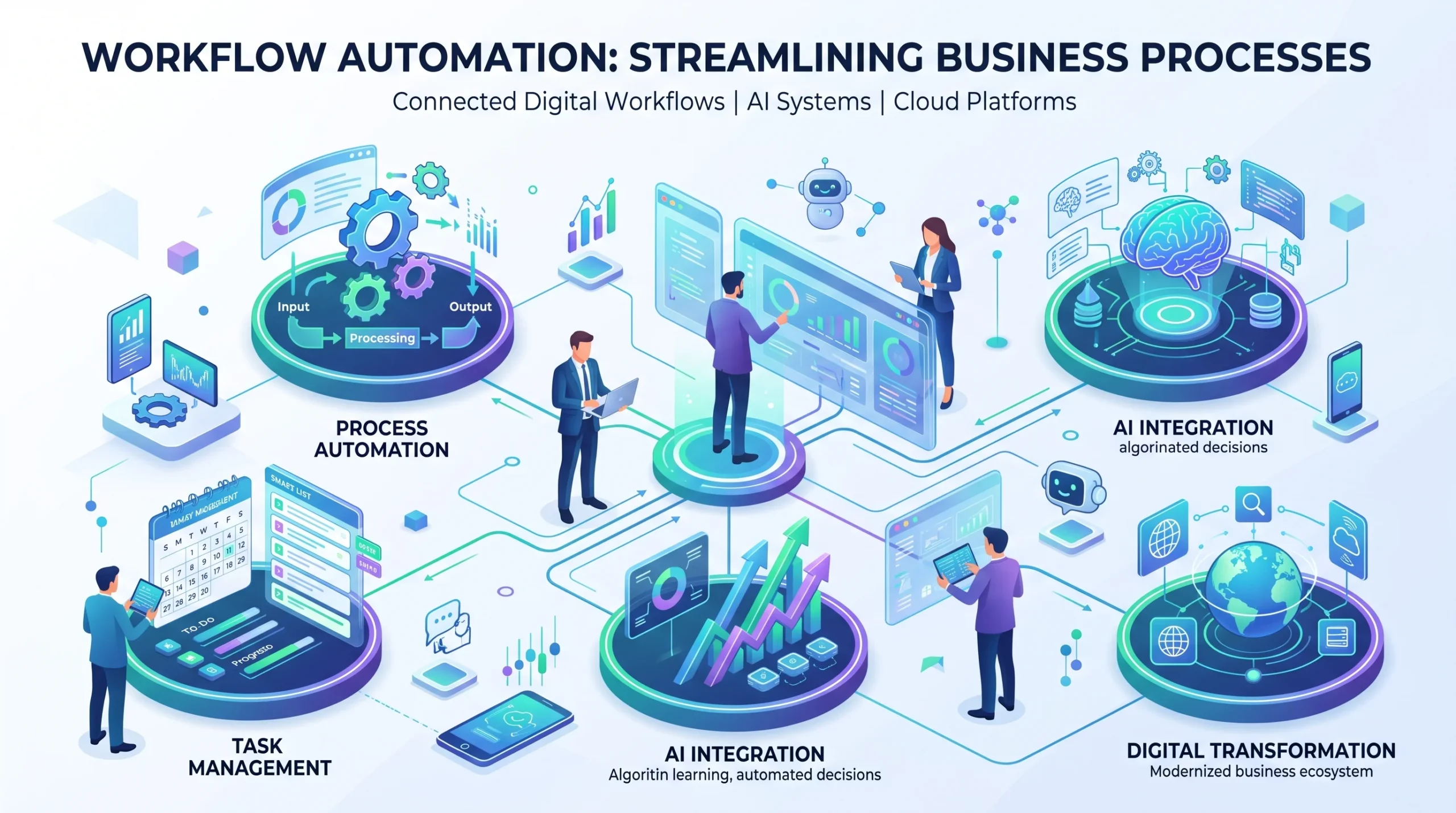
Workflow Automation
Introduction
Businesses spend lot of time on sending emails ,updating data,checking mails assigning work it although these tasks may not seen difficult and hectic but they take a lot of time by doing them manually
With the help of workflow automation business routine tasks can be handled automatically . instead of handling every step manually teams set up automation that performs specific actions based on triggers reducing labour time
What Is Workflow Automation?
The use of technology for automatic repetitive tasks and routine work processes is workflow automation . It works by creating a set of rules that tells a system what to perform at what time and when to perform actions when something happens
For instance, when a customer fills out a form that is online and automatic workflow send it to the right team creat a tasks and send confirmation email without doing each step manually and saves time
A simple workflow may look like this:
Trigger → Action → Result
For example:
New customer inquiry → Send confirmation email → Assign inquiry to the sales team
How Does Workflow Automation Work?
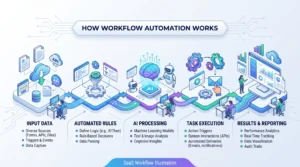
Every automated workflow starts with a trigger as new submission of form or email once the trigger occurs the system follows the rules to complete the required actions
The Basic Parts of an Automated Workflow
Most workflows include the following elements:
- Trigger: action that starts the workflow
- Condition: single rule or set of rules to decide what should happen
- Action:tasks tends to perform automatically
- Result: The output that comes after workflow automation
For example, a company may create this workflow:
- A support requests submitted by customer
- Request is automatically added to the support system
- Customer receives confirmation email
- The request automatically given to the appropriate team member
- Issue is resolved and notification sent to the customer
Why Is Workflow Automation Important?
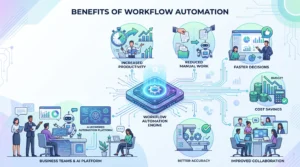
Some potential benefits include:
- Spending less time on repetitive tasks and save time
- Limit the chances of errors
- Tasks can be done quickly
- For consistent processing
- Easier teamwork
Types of Workflow Automation
The type of automation depends on the process and the tools being used.
Rule-Based Automation
Rule-based automation follows simple instructions.
- When some specific activity happens system takes actions accordingly
- Example: workflow automation works best for simple tasks that must be performed each time like sending a customer welcome mail when he completed the online form
Approval Workflow Automation
Approval workflow manages tasks that requires someone approval for further procedure
For instance when an employer submits a leave application system directly send i to the managers phone once the manager confirms it the employer will recipe a notification that how approval workflow helps in specific tasks
Cross-Application Automation
Some workflows connect different apps so that the information can be circulate easily for example a website form send customer information directly to project management or CRM
How to Start with Workflow Automation
You don’t need to automate everything at once start with a simple workflow to see how it works
1. Identify Repetitive Tasks
Look for the tasks that occurs often and follow these steps
Examples include:
- Sending confirmations mails to people
- Updating spreadsheets
- To assign tasks
- For reminders
- To collect submission forms
- Transferring information between systems
2. Map the Existing Process
First understand the process how it works than start the automation
Write down:
- What action start the process
- Who is involved in this
- What actions are need to be done
- Where information is stored
- What result is required
3. Choose the Right Automation Tool
It depends on the business needs
Consider factors such as:
- The apps you already use
- The type of tasks you want to automate
- Ease of use
- Security requirements
- Pricing
4. Start with a Simple Workflow
Star with the simple process like sending a confirmation email when a customer submits a form move to complex process whale taking simple test and checks that the workflow is working or not
5. Test and Monitor the Workflow
Automation must be reviewed frequently nt just one time set and forget bout it after
Check whether:
- Check whether the actions are correct or not
- Check accuracy
- Time to notify the customers emails
- Process of the workflow
Best Practices for Workflow Automation
- Keep Workflows Simple
- Automate Stable Processes
- Keep Human Oversight
- Document Workflows
- Review Automation Regularly
Common Challenges of Workflow Automation
- Poor planning
- Tool problems
- Complex workflows
- Data errors
- Lack of monitoring automation:
- Start small

FAQs About Workflow Automation
What is workflow automation?
Workflow automation uses technology to handle repetitive tasks.
What tasks can be automated?
Sending emails, assigning tasks, collecting data, setting reminders.
Does workflow automation require coding?
Not always but sometimes for advanced programing
Is workflow automation useful for small businesses?
Yes, it can help businesses for representative tasks and many more updates sending mails assigning works
Conclusion
Workflow automation helps businesses to improve repetitive tasks it limits time by manage everything efficiently starts with a simple task then test it improve it after that go for complex automations while keeping human oversight where needed