The Practical Guide to Data Analytics Jobs: Skills, Salaries, and Career Paths
Introduction
Businesses gather stacks of raw data every single day from click-throughs, sales and user reviews. If that info isn’t being put into use, it’s just going on by. That is why data analytics jobs are one of the best career options in the current job market with decent initial salary, remote working opportunities, and job security in the long term.
No need for high-level degree from a prestigious math program order get foot door to rapidly-growing field. If you like solve puzzles, ask questions deal details, path will open door many branches sports, finance, healthcare, retail. Now let’s explore roles how get hired.
Why Data Analytics Jobs Are Booming Right Now
Traditionally, businesses would make decisions based instinct intuition. Leaders use cold hard facts before make a new product launch, cut budget, hire new employees.
Turning Confusion into Clear Direction
A data analyst takes dirty spreadsheets, clears up some of the mistakes, and discovers some helpful trends. For instance, an online clothing retailer’s analyst may notice that there is a seasonal trend of shoe returns during specific months. Through analysis of customer opinions, they find a sizing problem on the website, correct the issue, and save the company millions of dollars in lost profits.
Great Pay and Strong Job Security
This is because nearly all industries today are gathering digital information, and there are more and more jobs for those who can do it. From a retail outlet selling running shoes into business that streams movies, to one that makes medical devices, they all require people who know numbers. It is an all-round demand, so you can choose to work in almost any field that interests you.
4 Essential Skills for Data Analytics Jobs
You don’t need to know them all before you begin applying. By concentrating just a few industry-standard tools, stand out from crowd get attention of hiring managers.
Structured Query Language (SQL): SQL language used to extract data from massive databases. Filter, join, group records using SQL is an essential skill for nearly every entry-level position.
Data Visualization Tools: An example of Tableau and Microsoft Power BI tools, help you convert flat rows of data into clean charts, heat maps, real-time dashboards, everyone your team understands glance.

Comparing Different Roles in Data Analytics
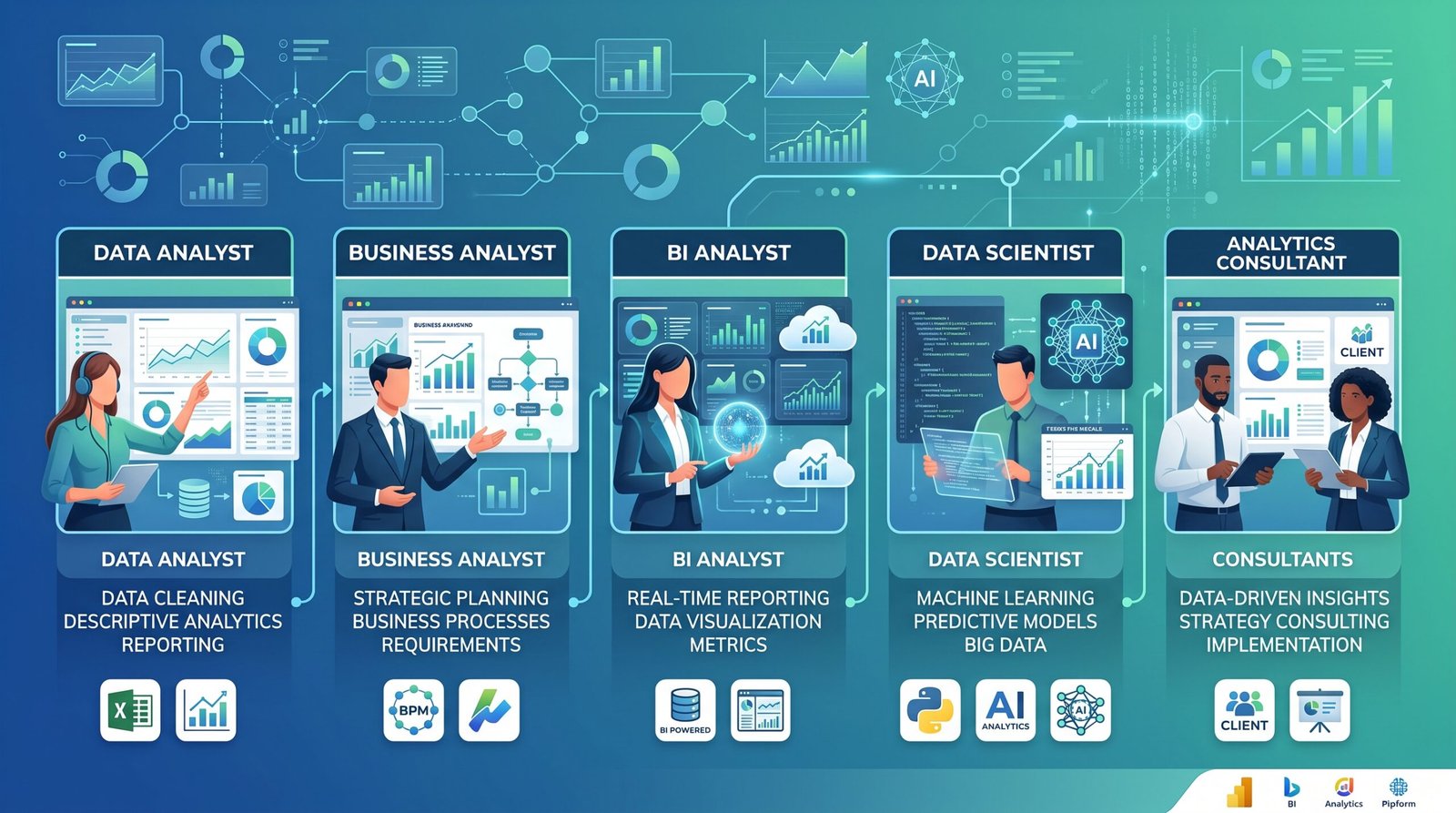
| Job Title | Primary Focus | Everyday Tools | Typical Experience Level |
| Junior Data Analyst | Cleaning data and running basic reports | Excel, SQL, basic Tableau | Entry-level (0 to 2 years) |
| Business Intelligence Analyst | Designing dashboards and tracking company KPIs | Power BI, Tableau, SQL | Mid-level (2 to 4 years) |
| Marketing Analyst | Measuring customer acquisition and ad performance | Google Analytics, SQL, Excel | Entry to Mid-level |
| Financial Analyst | Forecasting revenue and building budget models | Advanced Excel, ERP software | Mid-level (accounting background helps) |
| Operations Analyst | Improving supply chain and internal processes | Python, SQL, process mapping tools | Mid to Senior-level |
How to Land Your First Job Without Tech Experience
When all the positions are looking for previous experience, it can be intimidating to try out a new field. This can easily be surmounted by demonstrating your ability with actual projects.
Building a Simple Project Portfolio
Don’t create a list of software names on the resume, make 3 or 4 projects on their own and show how well you can solve real problems.
Highlighting Transferable Skills
You will have insight into people, customer service, how businesses work had retail, customer service, teaching experience past. Describe your experience past solving problems, optimizing schedules monitoring inventories.

FAQs
Is it essential computer science background to pursue career data analytics?
Those successful in becoming analysts experience business, history, biology psychology. Your college major is not as important as your portfolios and hands-on experience with SQL to an employer.
What is the time required to get good at data analytics from scratch?
Most people can learn the basics of a spreadsheet and SQL and a dashboard tool, such as Power BI, in 4-6 months with dedicated study of 1-2 hours daily.
Is there a way to do data analysis remotely?
Yes. The fact that data work only requires a computer and a secure internet connection means a majority of analytics jobs are fully remote or hybrid work options.
What should find myself having to spend hours reading practicing?
Begin with Ms Excel to learn the basics of organisation of data and then enter directly into SQL to learn the working of databases.
Final Thoughts
Data Analytics roles are a great combination of good salary, problem-solving, and career flexibility. Being able to code doesn’t require you to be a genius to make something work. Get a spreadsheet and begin to use SQL to ask questions about real data, and create a few projects to demonstrate your curiosity.