AI Literacy: Why It Matters More Than Ever
Introduction
AI has become ubiquitous these days. It can write emails, make movie recommendations and even drive a car in certain cities. Are you sure you know how it works or when to believe it though? The fundamental understanding is known as AI literacy. If not, people are left out in the cold.
Everyone from school-age children to Office workers and Grand Parents have to deal with the same problem on the phone. Knowing about AI does not require coding! It involves having an understanding of using these tools wisely and safely. This skill can benefit everyone in their everyday decision making.
What Is AI Literacy?
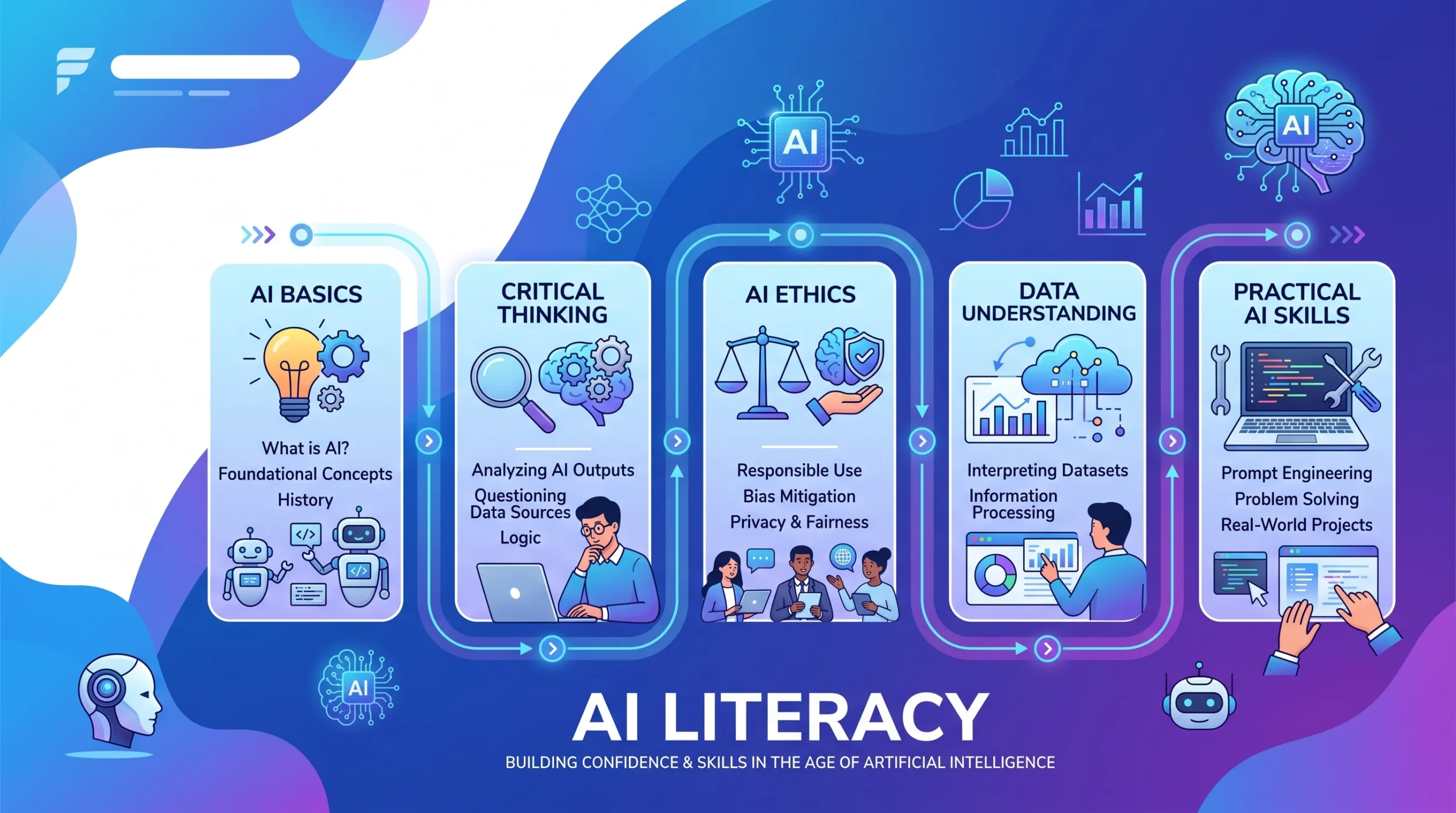
AI literacy is the ability to comprehend artificial intelligence, without a jargon-filled jargon. You get to know the capabilities and limitations of AI. You are also sensitive to when something is amiss.
It’s similar to reading traffic signs. There is no need to construct the road. All you have to do is to be familiar with the rules to keep safe.
The majority of people do not give a second thought to using AI. You can use phone cameras to get clear photos. Shopping apps make informed predictions on what you’ll want next. People find answers to their queries with the help of search engines in a few seconds. AI literacy transforms everyday moments into informed moments.
Why Simple Knowledge Beats Fancy Tech Talk
Don’t need extensive computer science knowledge. Concentrate on three simple concepts. First, AI ‘learns’ from data people provide it. Secondly, data may be wrong or be subject to bias. Thirdly, AI tends to be authoritative when it’s incorrect.
Understanding these points is helpful for asking more questions. Does this answer contain factual information? Who did the training of this system? What might it miss?
Why AI Literacy Matters for Everyone
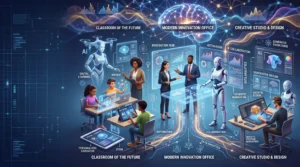
This information is useful to people of all ages. AI in homework tools with young students.Young students meet AI in homework tools. It is used at the workplace by adults. It can be found in health applications and banking web pages for older adults.
When it comes to AI literacy, trust can go out the window. You may wish to provide information that only a chatbot can keep, which may be accessed by a human agent. Another individual could believe a deepfake video and publish false information.Another person may think that a deep fake video is real and share fake news. These risks are increasing each year.
Daily Life Examples
Tap any news app, and an AI summary will appear. With AI literacy you will be able to check the original source. Order food online and the app suggests food to order. You realize whether or not the tips are prodding particular manufacturers.
In Educational Institutions, teachers utilize AI for creating quizzes. Students who have a working knowledge of AI can identify helpful practice and copy/pasted answers. In the workplace, where managers understand the boundaries of AI, they are making better hiring decisions and avoiding bad hires due to the use of biased tools.
How to Build AI Literacy Step by Step
Start small. There don’t need to be courses which last many months. It’s better to have a routine.
Ask Simple Questions Every Time
If an AI answer is provided, take a moment. Check your information sources: Where did this information come from? Is it similar to my previous knowledge? Is there a trustworthy website that has the same fact?
These questions are quick and easy – they take just 10 seconds. They are inculcated with the habit of checking.
Play With Free Tools Safely
Use a chatbot for conversation on non-work related issues. Inquire about it about history or cooking. Next, do some independent searching on the Internet and make comparisons. Pay attention to omissions and inaccuracies in the AI.
There are already lots of phones with AI capabilities. Explore the settings. Discover which data is collected by the app. Switch off things that you don’t use.
Talk About It With Others
Tell others about what you learn within the family. Children are sometimes the instructors for new applications on the computer. AI can’t offer grandparents the life experience they can. Discussions take away the fear and put it in a more realistic context.
Common Myths That Block Real Understanding
There are people who see AI as a magic potion, or a dangerous weapon. Both perspectives are lacking in considering the middle ground.
There’s a myth that says AI has a human way of thinking. It does not. It is able to discern patterns in data. Another mythos is that AI will take over all jobs in the near future. AI transforms some tasks, while creating new ones requiring human judgment.
Another myth is that only tech minds can grasp AI. But the reality is more benign. Helpful explanations are provided for each age. They are available at libraries, community centers or in free online videos.
Spotting Bias and Errors
AI systems that are trained are the data they are trained from. If the data is predominantly from one country or group, the answers are predominantly from that country/ that group. AI literacy is about seeing those voices that are not there.
Errors happen too. An AI could come up with a medical statement or book title. If you know this, then you don’t go on one source.
Practical Benefits You Can Feel Right Away
AI-literate people save time. They create using tools for drafts and edit using their own voices.
They are not susceptible to scams involving fake AI voices or images. They support children’s learning and curiosity with the use of learning apps.
In the workplace, teams that know all about AI select optimal software options. They established guidelines related to privacy. They postpone human review for critical decisions.
AI literacy helps to ensure technology is more equitable in the longer term.In the long run, AI literacy supports fairer technology. As more people become aware of the systems, businesses are under pressure to enhance the systems.
Teaching AI Literacy Across Ages
Simple, normal conversations at dinner are a good way to begin with the parents. Discuss with them how a recommendation engine works and take a look at a streaming service. Schools are able to add short lessons to the existing subjects. AI and the news can be explored in History class. In math class, students can discuss about the probability of what they predict.
Groups of community members who assist older adults. Short workshops on how to set up your phone and how to be safe on the Internet are effective. Patience and real-world scenarios will be the key.
Looking Ahead Without Fear
AI will continue to develop. New tools come up every month! Those who remain inquisitive and cautious will adjust the best. AI literacy is a skill that needs to be learned. It is continuous questioning of and verification on sources.
You have similar skills that you already have in your toolbox. Consumes labels on food. Before purchasing you do read reviews. The rest is a natural progression when it comes to AI.
Final Thoughts
Education with artificial intelligence empowers ordinary people with power. Transforms confusion to confidence. It helps protect privacy, assists with decision making and creates new opportunities.
Begin with one of the tools that you already use. Ask an additional question. Describe observations. Those little actions become a lot of action over time. The objective is NOT perfection.