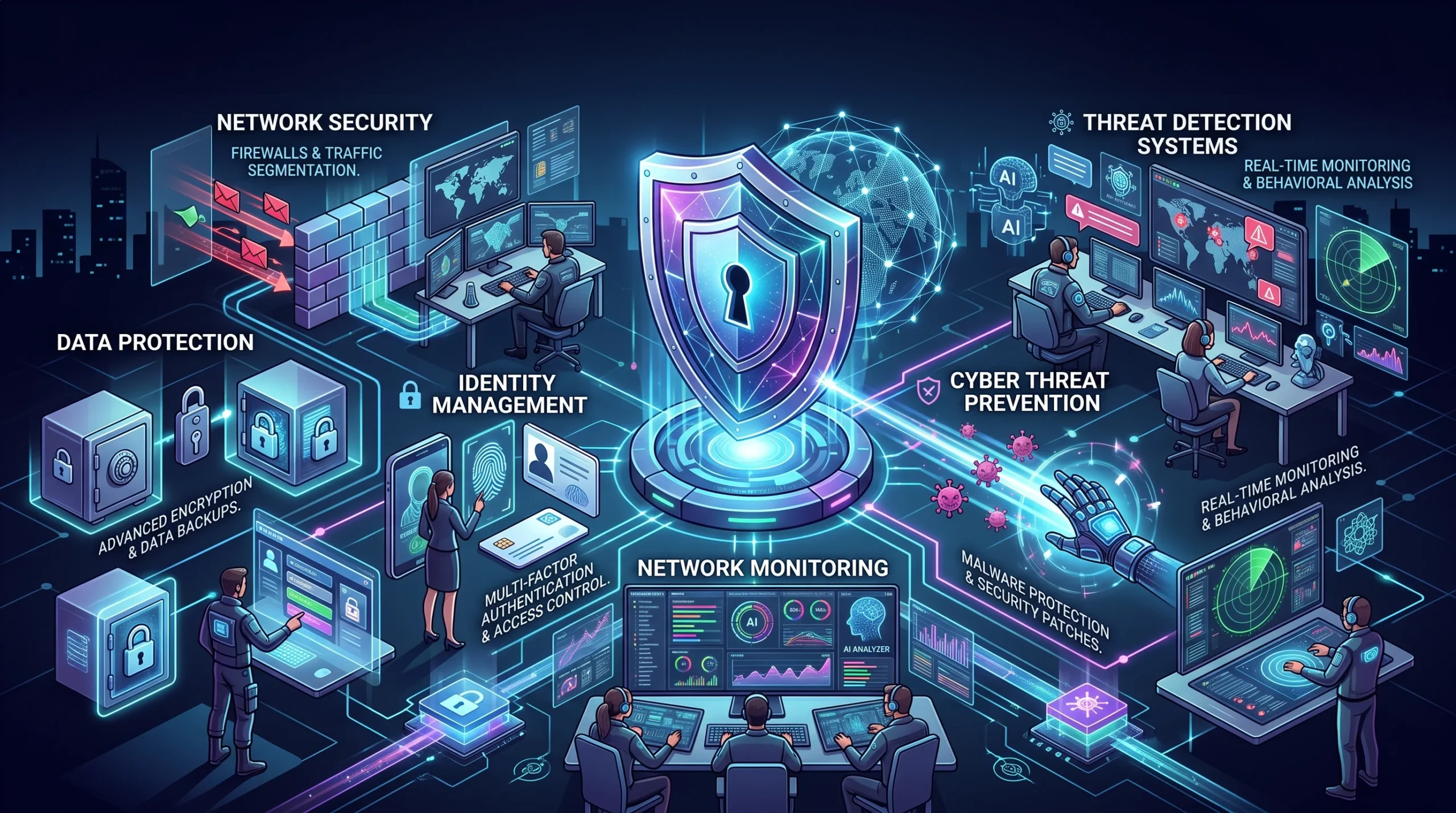
Cybersecurity: A Simple Guide to Staying Safe Online
Introduction
The Internet made life easier, but created new risks well. Websites, Apps, Online banking, email, social media; we use them all day long. This has made cybersecurity top priority across board.
It enables us safeguard our personal data, devices, accounts businesses against online dangers. Minimal security practices help minimize many common risks making people feel more secure using internet.
What Is Cybersecurity?
Cybersecurity is about the activities of protecting computers, phones, networks, websites and digital information from harmful interference or unauthorized access.
It includes a lot of digital safety aspects. It can, for instance, safeguard your password from being stolen, prevent malware from doing harm to your computer, and aid businesses maintain customer data safe.
Cybersecurity doesn’t just apply to big companies. It is important to students, employees, families, small businesses and all users of an internet connected device.
Why Is Cybersecurity Important?
When on internet, we use information almost everything do. This could contain names, phone numbers, passwords, financial information, private messages work documents.
Criminals exploit information for fraud, ID theft, blackmail other destructive causes.
Good cyber security mitigatessuch risks. It also supports organizations to remain trustworthy and avoid pricey security issues.
The primary benefits of Cybersecurity are:The major benefits of Cybersecurity are:
Main Benefits of Cybersecurity
- Protects personal information
- Maintains online security of accounts
- Reduces the risk of identity theft
- Protects against malware attacks
- Protects business data
- Incorporates security into online banking.Implements online banking security.
- Reduces financial losses
- Builds customer trust
- Keeps important systems running
No attack can be prevented with good cyber security. Rather, it establishes a number of layers of protection that make an attack more difficult to carry out and make it less consequential.
Common Cybersecurity Threats
Internet threats are ever-evolving. There are some attacks that are very technical, others rely primarily on human error.
1. Phishing
Probably one of the most common Internet attacks is a phishing attack. Attackers try to send out fake e-mail, messages, or websites that appear to be a legitimate site.
They could masquerade as a bank, delivery service, social media site or even as someone you know. Their aim is generally to get them to disclose confidential details or click on a dangerous link. Double check the sender and web site address before acting.
2. Malware
Malware – malicious software. It intended to harm device access information without permission infiltrate device.
This includes viruses, spyware, ransomware some forms of malicious software.
You can minimize threat of malware maintaining your operating system security software up-to-date.
3. Ransomware
Ransomware is a serious type of cyberattack. It has the capability of locking or encrypting files and then demanding payment from the victim.
Businesses are frequently attacked as they could contain a lot of valuable information. If an attack happens, regular backups may be of great help.
4. Weak Passwords
If all the accounts used weak passwords, would much easier crack them. If you same password for multiple websites, you even bigger problem.
5. Social Engineering
Social engineering deals with the manipulation of human beings, not technology. An attacker can make a person feel rushed and get them to give up a password, or send money or give out private information. One of the best coverings for such attack is to be careful when with unexpected requests.
Cybersecurity Best Practices
It’s not necessary know lot about technology secure online. There some things make difference.
Use Strong Unique Passwords
Use various passwords for sensitive accounts. Don’t give obvious information like your name, birthday or phone number.
A password manager is also able to develop and keep better passwords without you having to keep them in mind.
Turn On Multi-Factor Authentication
MFA is an additional layer of security upon login. For instance, you type your password confirm authentication app another means.
If your password obtained by someone, additional security could make challenging for them break into your system.
Keep Software Updated
Updates don’t just concern the addition of new features. They’re generally also essential for security updates.
Update your phone, computer, browser, apps nd other software available.
Be careful clicking on links.
Be Careful With Links
Avoid clicking on all links that you get. A message can appear as it is supposed to, but still direct to a bogus or hazardous Web site.
A message that requests you to login urgently, visit the official website directly and not via the link provided in the message.
Cybersecurity for Businesses
Commercial enterprises deal with lots of delicate data. This could include customer records, payment details, employee ecords, and confidential company files.
Successful attacks can lead to losses in terms of money and disruption of regular operations. It also can ruin a company’s image.
Key Business Security Measures
| Security Measure | Why It Matters |
| Strong passwords | Protects accounts from unauthorized access |
| Multi-factor authentication | Adds another layer of account security |
| Regular backups | Helps recover important files |
| Software updates | Fixes known security weaknesses |
| Employee training | Reduces mistakes and phishing risks |
| Antivirus protection | Helps detect harmful software |
| Access controls | Limits who can view sensitive data |
Train Employees
Staff are a key component in cyber security. Even if the technical system is robust, there can be a simple human mistake that can have an impact on it.
Employees can be trained to spot emails that seem suspicious, to generate secure passwords, to maintain proper control of sensitive information, and report unusual activity with regular training.
Cybersecurity on Mobile Devices
Personal information is lurking all around in smart phones. These can hold pictures, contact details, emails, banking applications, passwords, and personal chats.
That’s why mobile security is as crucial as computer security.
Simple Mobile Security Tips
- Use a screen lock.
- Make sure your phone up to date.
- Install applications trusted sources.
- Review app permissions.
- Do not use Wi-Fi networks with which you are not familiar for sensitive activities.
- Uninstall unwanted applications.
- Enable device-finding features.
- Don’t disregard security notifications.
The Role Cybersecurity Professionals
Cybersecurity workforce responsible for safeguarding systems cyber threats. They tasked responsibility of monitoring networks for potential issues, testing security mechanisms, investigating presence of suspicious activity, reacting cyber incidents.
There are various positions available in the domain. There are professionals who specialize in network security and others in ethical hacking, security analysis, cloud security or incident response.
As a growing number of services go online, organizations must have the right people on board to recognize and deal with digital threats.
Future of Cybersecurity
Technology advancing rapidly cyber threats. New possibilities emerging alongside new security challenges thanks AI, cloud computing, smart devices connected systems.
With an increase in digital information collected and processed, organizations will have to adopt more robust security measures.
Simultaneously, normal users must also be aware of basic online safety. While technology can offer some protective measures, there is a role for the responsible use of technology in cyber security.
Final Thoughts
Cybersecurity no longer something only technology experts need understand. It’s integral part of digital life today. Simple precautions help safeguard sensitive information from setting up strong passwords spotting suspicious messages.
Employing technology, training staff, backups, policy perfect combine them. People should also vigilant make sure devices kept up to date firmware. While a system cannot risk-free, made much safer for people good cybersecurity practices, many risks diminished.
FAQs
What is cybersecurity?
Cybersecurity: The protection of digital devices, systems, networks information from threats on internet.
Why is cyber security important?
Defensive mechanism safeguards personal information, accounts, money business information from cyberattacks.
What can I do to enhance my cyber security?
Have strong passwords, use multi-factor authentication, update devices, don’t click suspicious links.
Do consumers need concerned about cybersecurity?
No. Cybersecurity essential for anyone uses smartphone, computer, websites, apps online services.